Literary NLP: Sentiment Across Classic Novels#
Mapping mood through eight public-domain novels
Sentiment, emotion, vocabulary, and character presence as the plot unfolds
Project Overview#
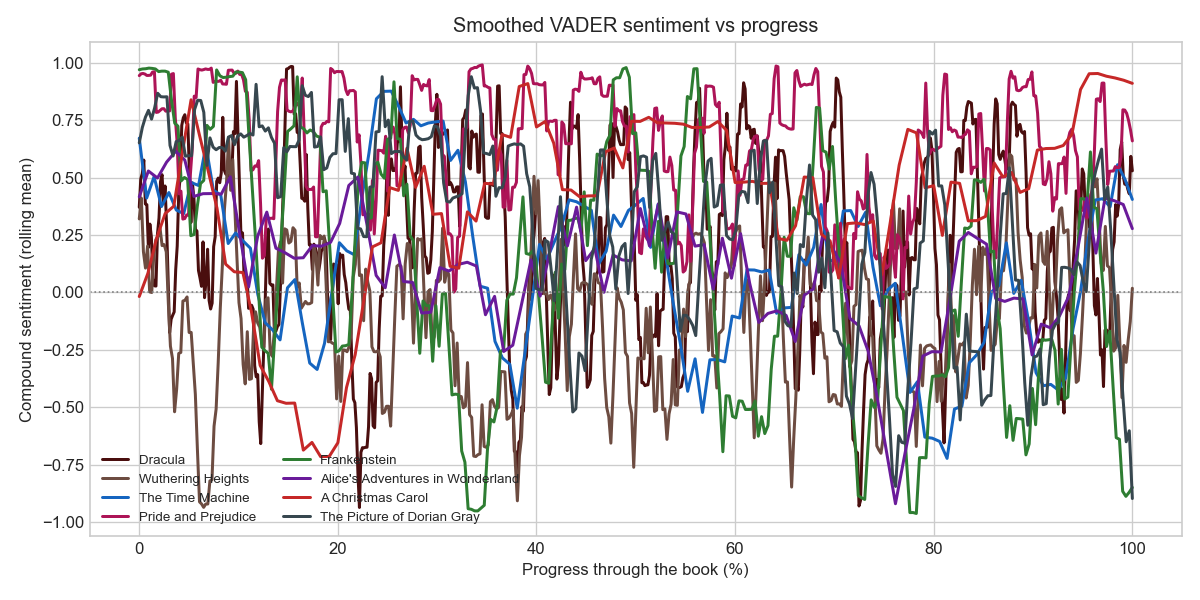
Do novels darken as they head for the ending, or do they brighten? This project treats classic fiction as a time series: each book is split into page-sized windows of text, then a different NLP technique is applied on each page to watch language and mood change from opening to close.
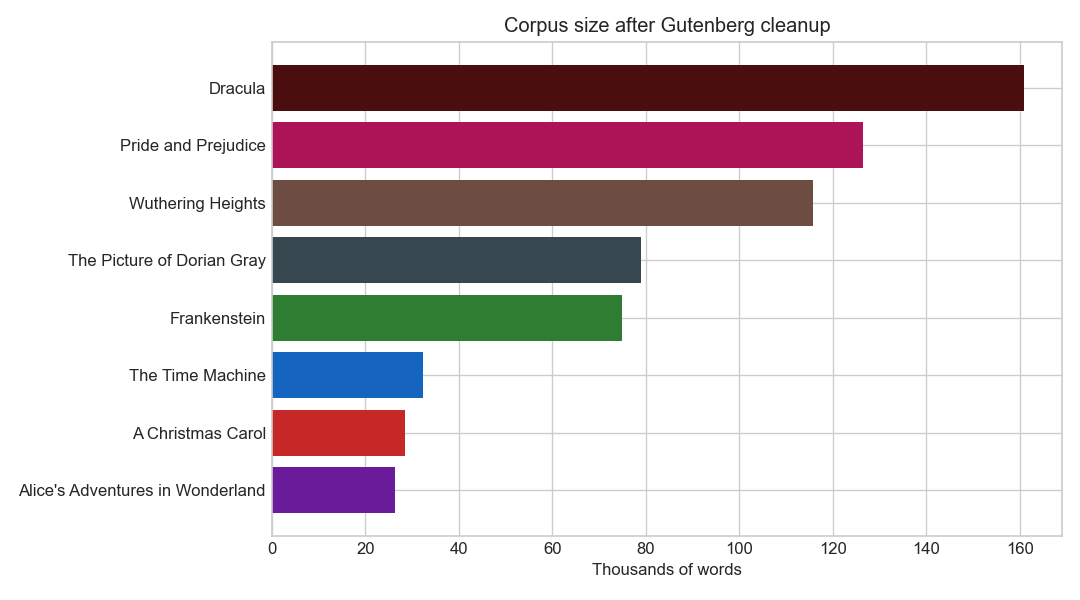
The corpus is eight well-known public-domain titles from Project Gutenberg — gothic horror, a redemption fable, a marriage plot, and a trip down a rabbit-hole — chosen so the trajectories have something to disagree about.
Lexicon methods (VADER and the NRC emotion lexicon) are used throughout. They are fast, fully reproducible in a Jupyter Book build, and good enough to compare relative arcs. They are not a substitute for a literary reading: irony, archaic diction, and free indirect style can fool a word list.
Project Structure#
Six notebooks, each applying one technique to the same eight books:
2. Sentiment Trajectories
VADER compound scores vs progress — does the ending darken or brighten?
3. Emotion Lexicon
NRC joy, fear, sadness, anger, trust, and anticipation through the plot
Key Questions#
Which titles become darker in the final third, and which recover?
Do emotion lexicons pick up gothic fear versus Austenite trust?
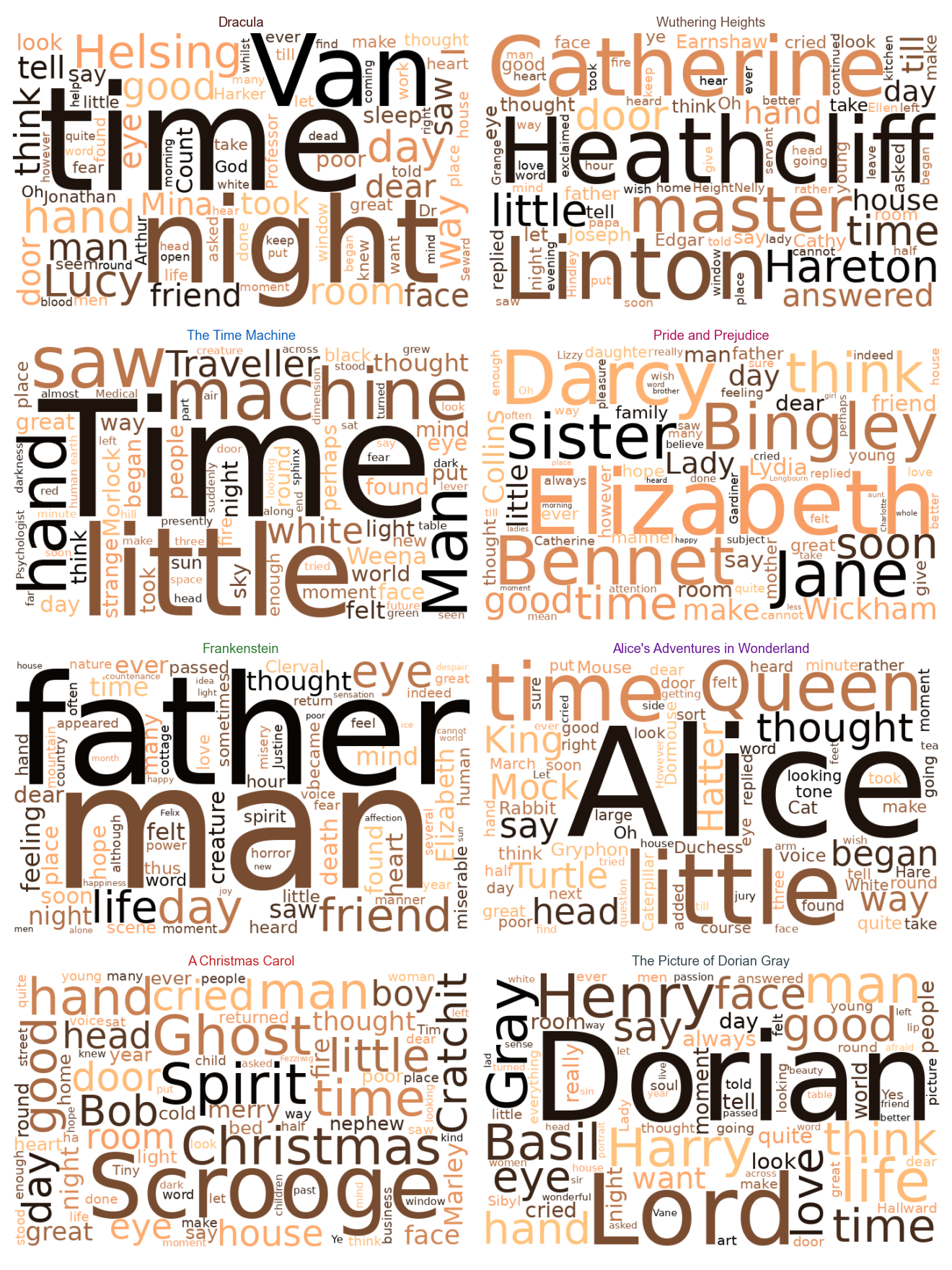
Which words are distinctive to each novel once stopwords are stripped?
Can character mention-rates reconstruct a plot without reading it?
Preview Figures#
Dataset#
Source: Project Gutenberg plain-text ebooks
Titles: Dracula, Wuthering Heights, The Time Machine, Pride and Prejudice, Frankenstein, Alice’s Adventures in Wonderland, A Christmas Carol, The Picture of Dorian Gray
Unit of analysis: ~250-word page windows (a Gutenberg file has no printer pagination)
Bundled file:
data/pages.csv— committed so CI does not fetch Gutenberg at build time
Technical Stack#
Python • NLTK (VADER) • NRCLex • scikit-learn (TF–IDF) • wordcloud • Plotly • pandas
Ready to explore?